
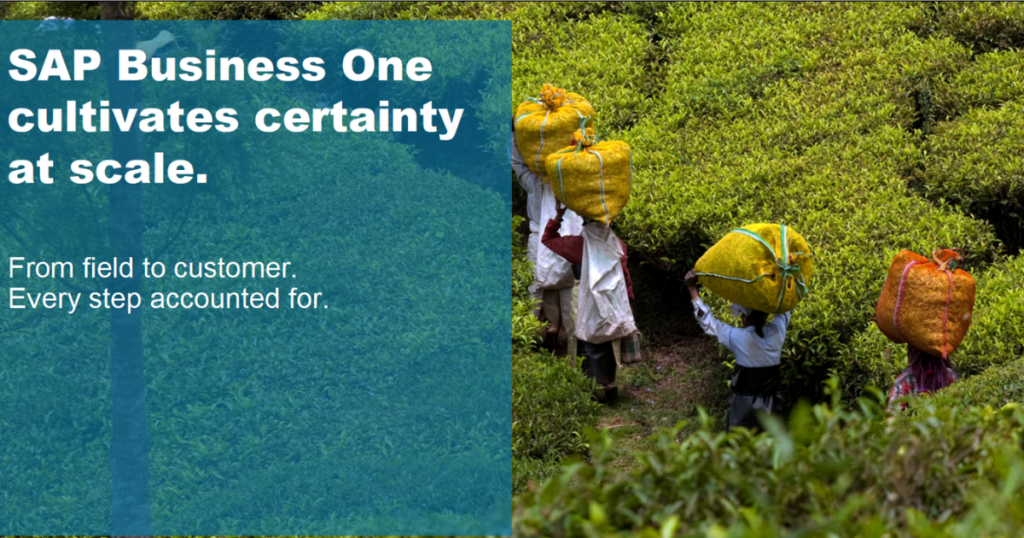
The agribusiness industry is facing increasing pressure: growing operational complexity, strict agricultural traceability requirements, cost optimization, and scaling across multiple divisions and locations.
In this context, many companies realize that the main challenge is not a lack of data, but rather a lack of real-time operational visibility across the agricultural and production processes.
Without an integrated system, decision-making becomes reactive and efficiency declines.
Why agribusinesses lose operational control
As organizations grow, common challenges emerge:
- lack of integration between production and inventory management
- outdated production data with no real-time updates
- fragmented agricultural traceability
- disconnected procurement processes
- lack of unified financial visibility
These inefficiencies lead to a reactive operating model, where decisions are based on incomplete or delayed information.
The solution: agribusiness digitalization with an integrated ERP
More and more companies are adopting ERP solutions such as SAP Business One for agribusiness, which connects all critical processes into a single platform:
- agricultural and manufacturing production management
- end-to-end traceability from raw materials to finished goods
- real-time inventory management
- integrated procurement and supply chain
- accounting and financial reporting
The goal is not just digitalization, but creating full, centralized operational control.
Key benefits of digital transformation in agribusiness
1. End-to-end traceability across the supply chain
With full agricultural traceability, companies can track every stage of production:
- raw material origin
- manufacturing processes
- batch tracking and distribution
This improves food safety and reduces operational risk.
2. Real-time operational visibility
Integrating production and inventory data provides continuously updated information.
This leads to:
- faster, data-driven decision-making
- reduced operational delays
- elimination of outdated reporting
3. Cost optimization through smart procurement
When procurement is directly connected to production:
- unnecessary orders are eliminated
- resource waste is reduced
- costs are better controlled
4. Operational scalability for agribusiness growth
An integrated ERP system enables business expansion without losing control:
- new farms or production units
- geographic expansion
- increased production volumes
All managed within a unified system.
The transformation: from reactive operations to strategic control
Digital transformation in agribusiness is not just automation—it is a fundamental shift in the operating model.
Companies move from:
- reacting to issues
to - proactively controlling the entire operational chain
This transition results in:
Conclusion: the future of agribusiness is integrated
In an increasingly competitive agricultural and industrial environment, agribusiness digitalization and ERP integration are becoming essential.
Companies that invest in visibility and operational control are not just optimizing processes—they are building a sustainable competitive advantage.
The question is no longer whether digitalization is necessary, but how long companies can afford to operate without it.